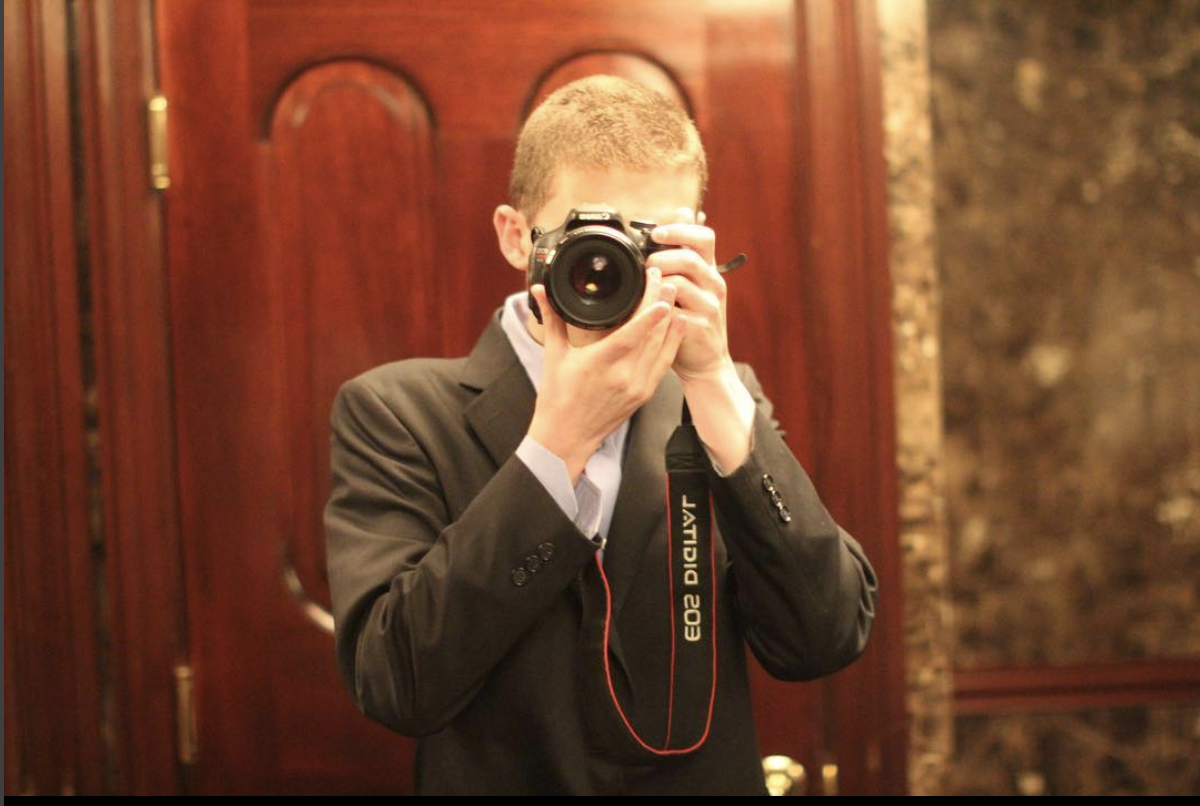
I walk along the painting at the Hilbert Museum. I’ll never forget the day: October 31st, 2017. I went in not really expecting much as I only went as a requirement for a class to analyze a painting. I learned very quickly that looking at these paintings was not work, it was a pleasure. There were two paintings there that day that changed my perspective.
The first one while goofy on the surface, had some beauty that I was able to attach to it.
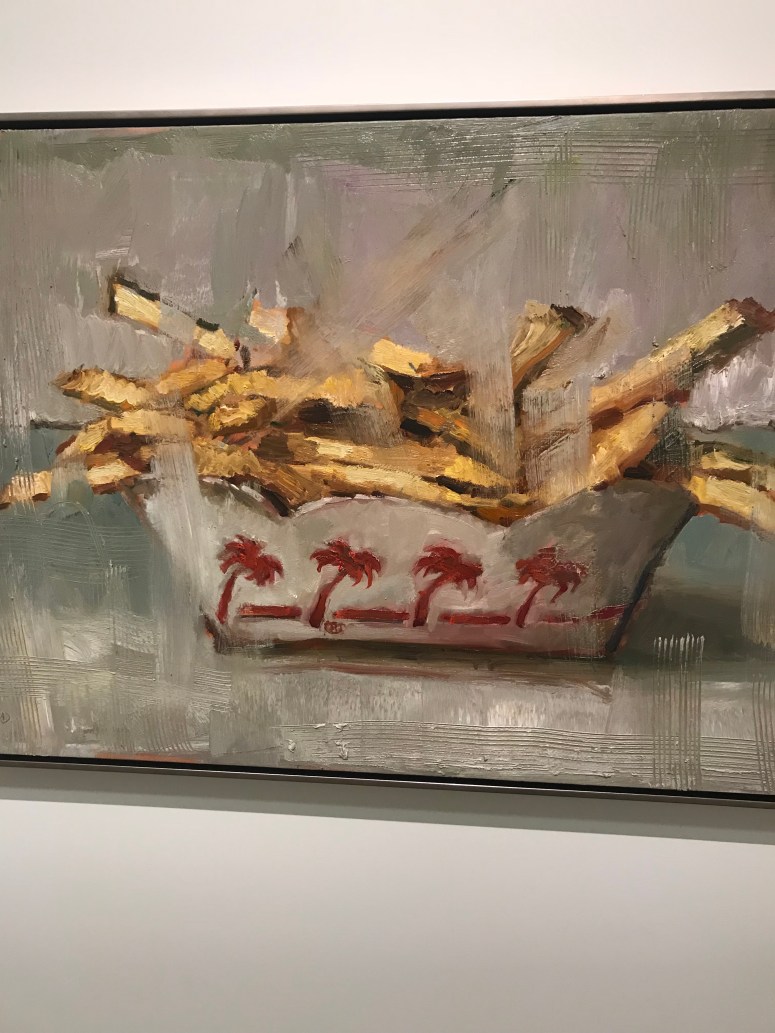
The painting is of some classic In n Out french fries, a true California delicacy. While just charming and endearing on the outside, I found so much more to love just by knowing that you cannot see this of painting in any other state in America. The culture here in California is so singular in order produce this type of art and to be an outsider from another state and from another coast, this is when I realized how lucky I am to be able to take the state’s culture at this time in my life where I can fully appreciate it.
The second painting posed to me a question that I wish to answer here today.
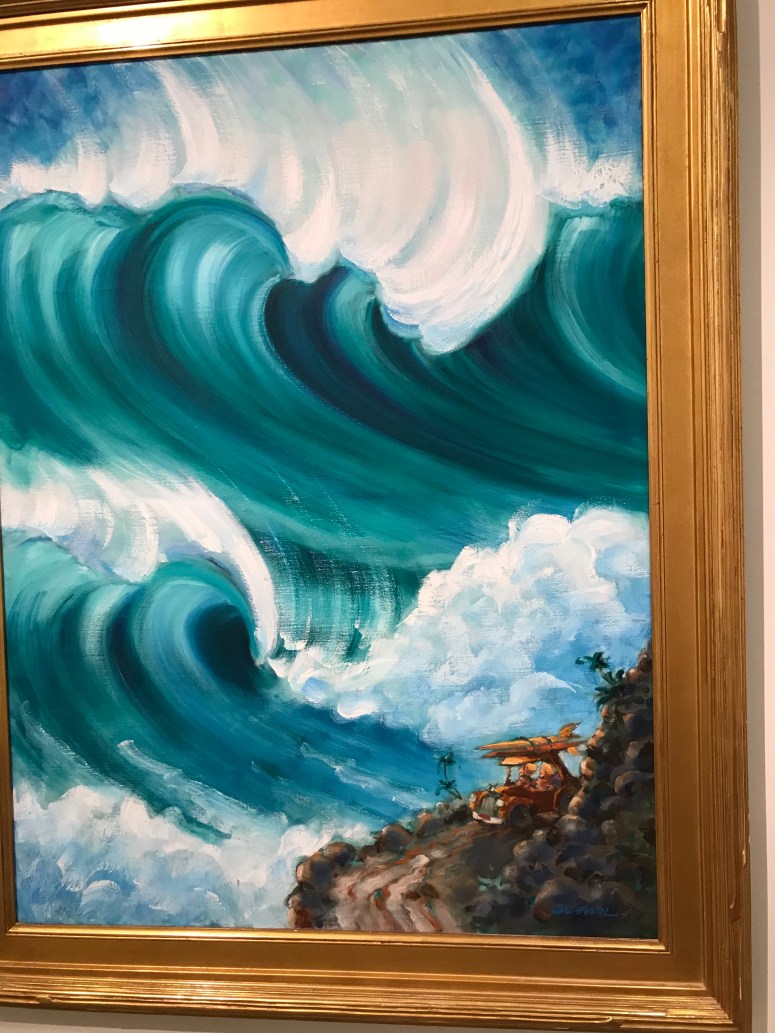
The beauty of the aqua blues that took most of the painting was transfixing when I saw it up close. The whole exhibit was that charm as it focused on art from the surfing culture on California of the 60s including photos, concert posters and information on famous artists of that time, but this stood stood out. The guys in the car are on their way to riding these monster waved and the question it leaves me is why? What is it about a board in water that defined a generation in California, that impacted film, art, and clothes, and that still leaves its mark today. These paintings of that fateful day taught me to take in this culture and explore a major aspect of it.
I had many theories starting out for why surfing remains as big as it is. There’s the liberation, the excitement, and the overall adventure of it all, but one that never came to mind was bringing mother nature into the mix. In an interview with Independent.com, the surfing club president at UC Santa Barbara said “This kind of access to waves for an entire community is pretty unparalleled for most of California.”. This quote always stuck out most in my research because surfing is being one with nature and having easy access to these waves on beaches all over the state. It’s so easily available and being able to ride and tame the makings of the universe must be a euphoric experience. Not many activities have that same slant that surfing brings to the table.
In a way, the geography of California and surfing were always going to hand in hand. California has 840 miles of coastline and 420 public beaches. Those number and that kind of access really isn’t found anywhere else, so it seems as though California was always going on a crash course to meet with surfing at some point in history.
That history begins in the 60s in beaches all over California. Decades earlier, three teenage Hawaiian princes made wooden longboard in order to ride wives and created surfing as we know it today. The sport kept growing in size and size and made its way to American where it was always destined to meet with California. Where in Hawaii, it started as good old fun, the reason it stuck here in California has more heft to it.
It was more than just a board in water, it brought together the rebellion, the goofy, and the adventurous in a time of specific society expectations.
“There was this camaraderie of ‘Let’s escape from the bullshit … and be together in the freedom of the ocean,’” -Cori Shumacher, founder of the History of Women’s Surfing Project
The board was a key. It was a key to the majesty of the ocean, this vast and enormous blue. It was also the key to escapism. When you were expected to have a family and a job at a certain age, all that noise did not mean anything when on the beach with nothing but good vibes. That feeling of an endless summer didn’t cost a thing, only an open mind and a board. It was community away from society centered centered on the freedom of mother nature and unmatched community at that.
While we have observed the impact of surfing in the 60s, it is crucial to note that this impact surfing has changed throughout the years to where we are right now in 2018. When we imagine surfing in 1960s California, we envision the youth and younger kids, but surfing was able to reach a wider demographic in the 50 years since. People of all ages hop on the board these days, which could attributed to the rise of extreme sports in America and large population of dare devils seeking the next thrill. Surfing is for everyone now looking for a thrill, not like the 1960s where it felt like a staple of youth. We also see surfing competitions sprung anywhere where there is a beach along with surfing clubs at colleges and universities and the surfing culture becoming a billionaire dollar business now. What has changed from the 60s is the reach of surfing to more people and finding more avenues to reach people here in 2018.
This unmatched community spawned music, fashion, art, and even a whole language that won’t be found anywhere else. Surf pop jump started the career of The Beach Boys with songs that capture the youthful vigor and spirituality of surfing. Board shorts and wetsuits became common to buy in California and the bikini became iconic here in America from the help of surfing. The “beach party film” became an entire subgenre in 1960s cinema. Surfing films have found their way throughout film history even past the 60s where we started with the coming of age film The Endless Summer to the Keanu Reeves action thriller Point Break from 1994. The reach this community had is unparalleled. No other sport captured the zeitgeist of the 60s like surfing did and no other sport left its mark on a culture either.
At the end of the day, it’s both easy and hard to answer the question of why a board in water has the power it does. The easy answer is the freedom, the connection to the mother nature, the community, and the escapism. The real answer however is that there is no answer. Surfing is different to everyone. What surfing was to a 16 year old in 1962 listening to the Beach Boys is different than the president of the surfing club at UC Santa Barbara in 2018. Whatever personal investment aside, what those two both believe in is that surfing is more than just a board placed in an ocean.
SOURCES:
Severson, John. Making Waves. 1963, California, USA.
Brown, Bruce, director. The Endless Summer. Monterey Media, 1966.
Goldman, Sam. “The Epitome of Surf Culture”. Santa Barbra Independent 7 Feb. 2016: 1. Online.
Herreria, Carla. ‘A Look Back at Surfing’s Rebellious, and Goofy, Past”. Huffington Post 24 June 2016: 1. Online.
 Dirty Water